SPARC-P — AI-Powered Clinical Communication Training for Pediatric Clinicians
App Design
Project
Timeline
What I did
Team
Overview
SPARCP is a AI training tool for doctors & nurses to practice evidence-based clinical communication.
SPARC-P helps pediatricians build confidence in discussing HPV vaccination with hesitant parents through AI-powered conversational practice.Vaccine counseling is one of the most challenging aspects of pediatric care—clinicians must balance medical evidence with empathy, cultural sensitivity, and trust-building, often in high-pressure appointment settings.
background and Problem
Pediatric clinicians frequently face high-stakes vaccine conversations with hesitant or misinformed caregivers.

Research Question
"How might interaction design shape the quality of deliberate practice in AI-mediated clinical simulations?"
System Architecture
Meet the AI Agents
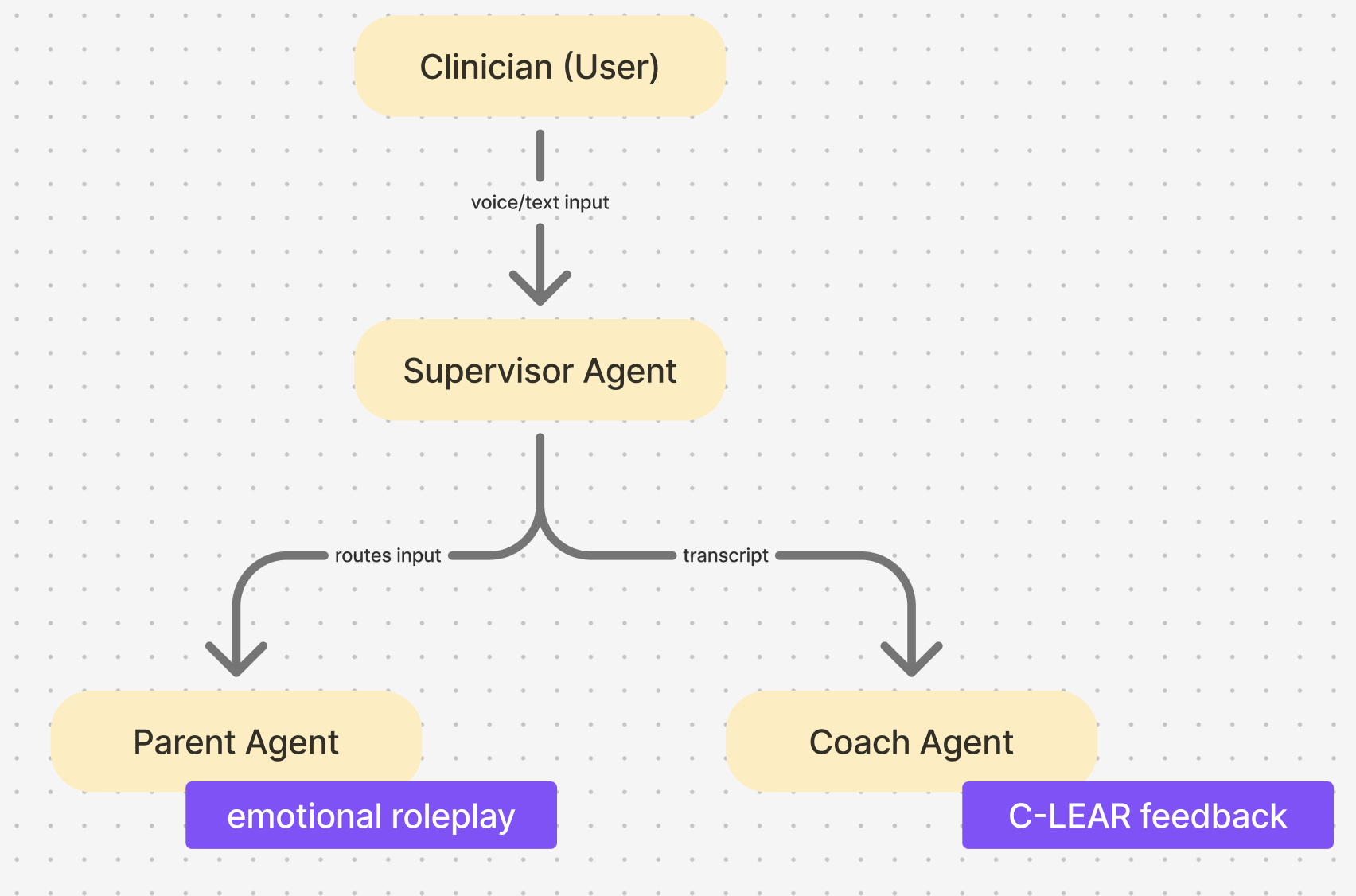
Three specialized AI agents operate in parallel: the Parent Agent (emotionally responsive roleplay), the Coach Agent (C-LEAR* aligned feedback), and the Supervisor Agent (safety, flow control, guardrails). My role was designing the interface layer where all three become a coherent human experience.
*C-LEAR Communication Framework
- Counsel (recommend the vaccine)
- Listen (invite concerns)
- Empathize (acknowledge and validate)
- Answer (address the concern directly)
- Recommend (close with a strong recommendation)
IDEATION
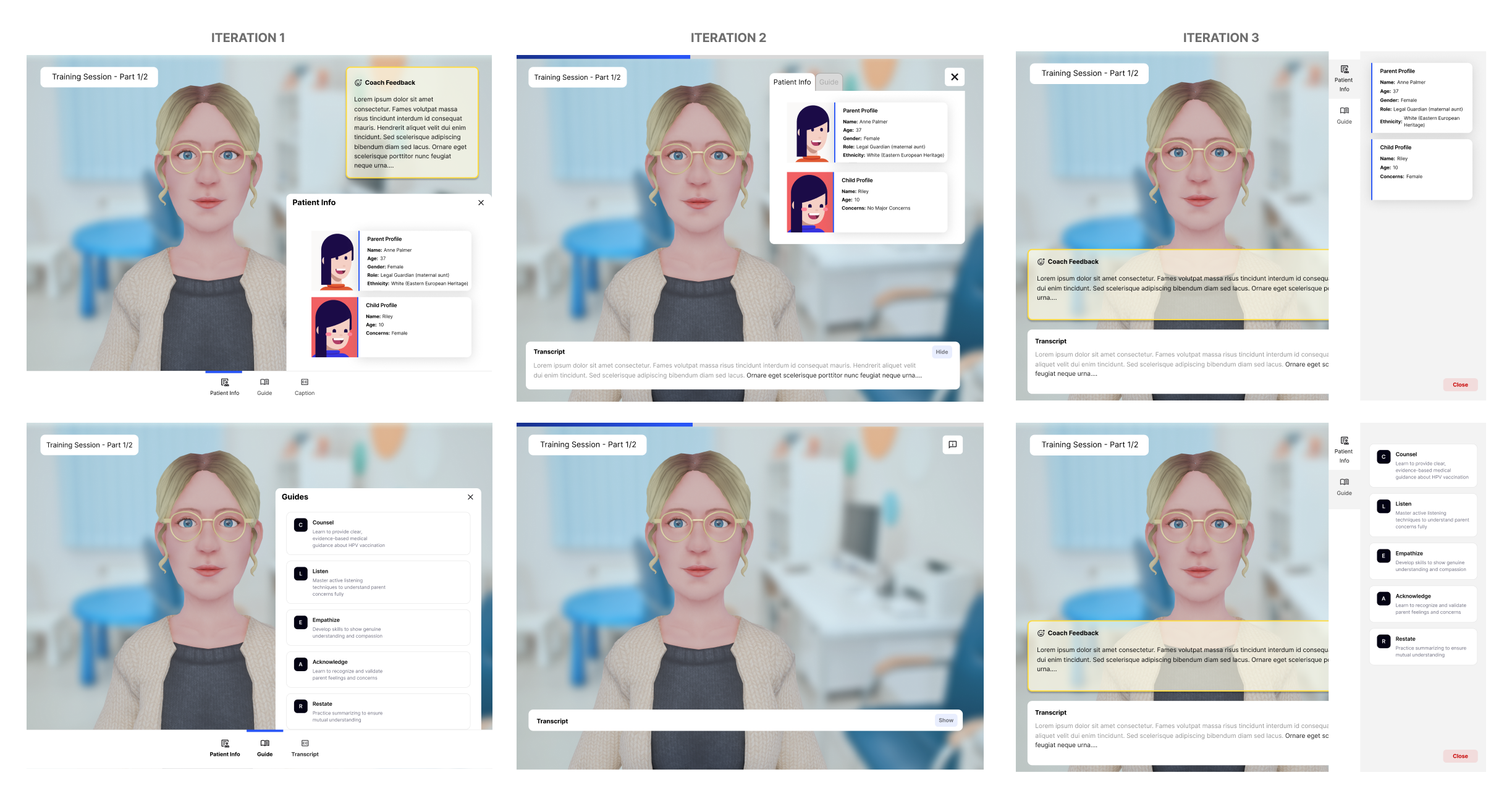
Multiple Iterations



TESTING THE SOLUTION
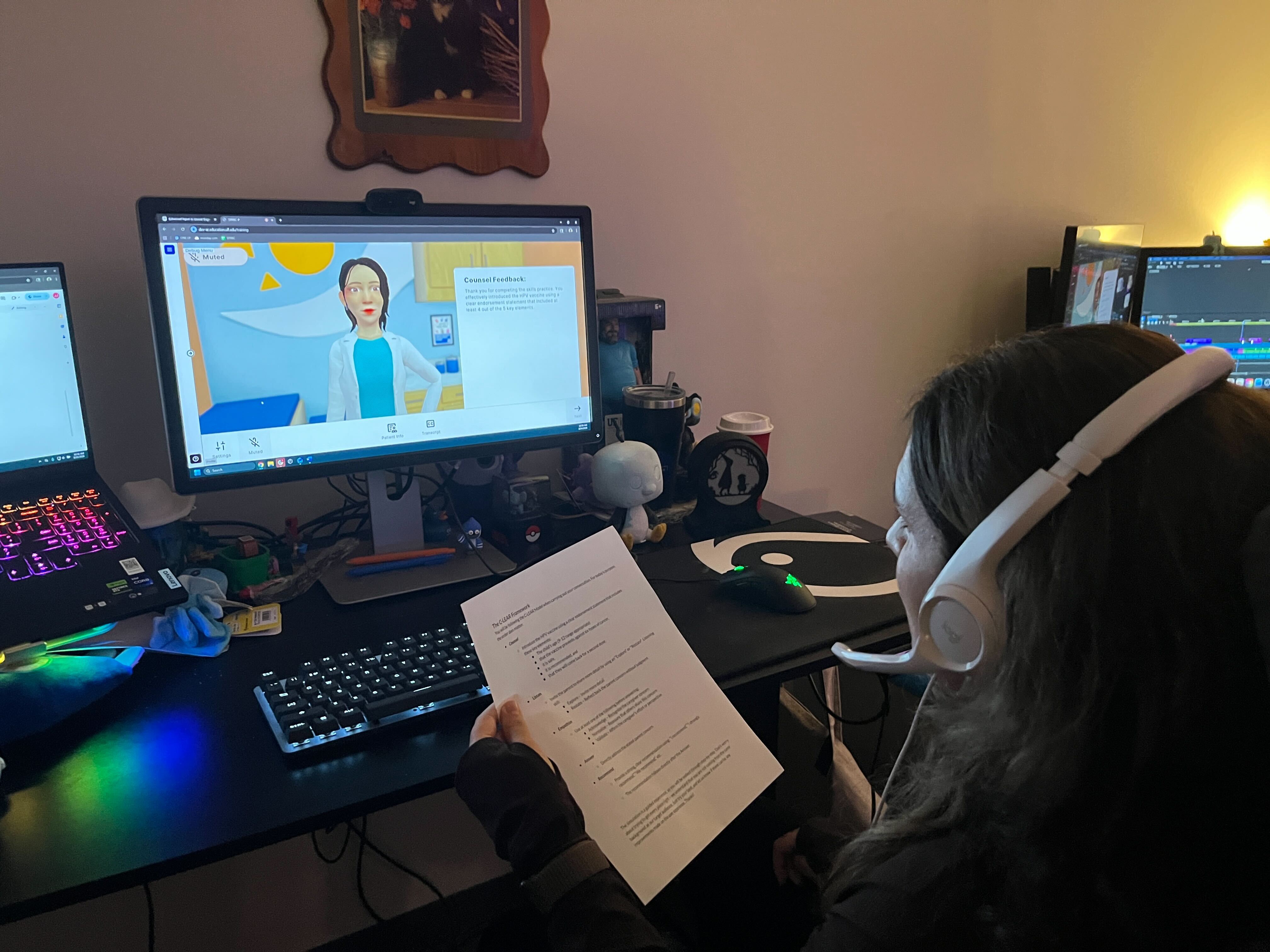
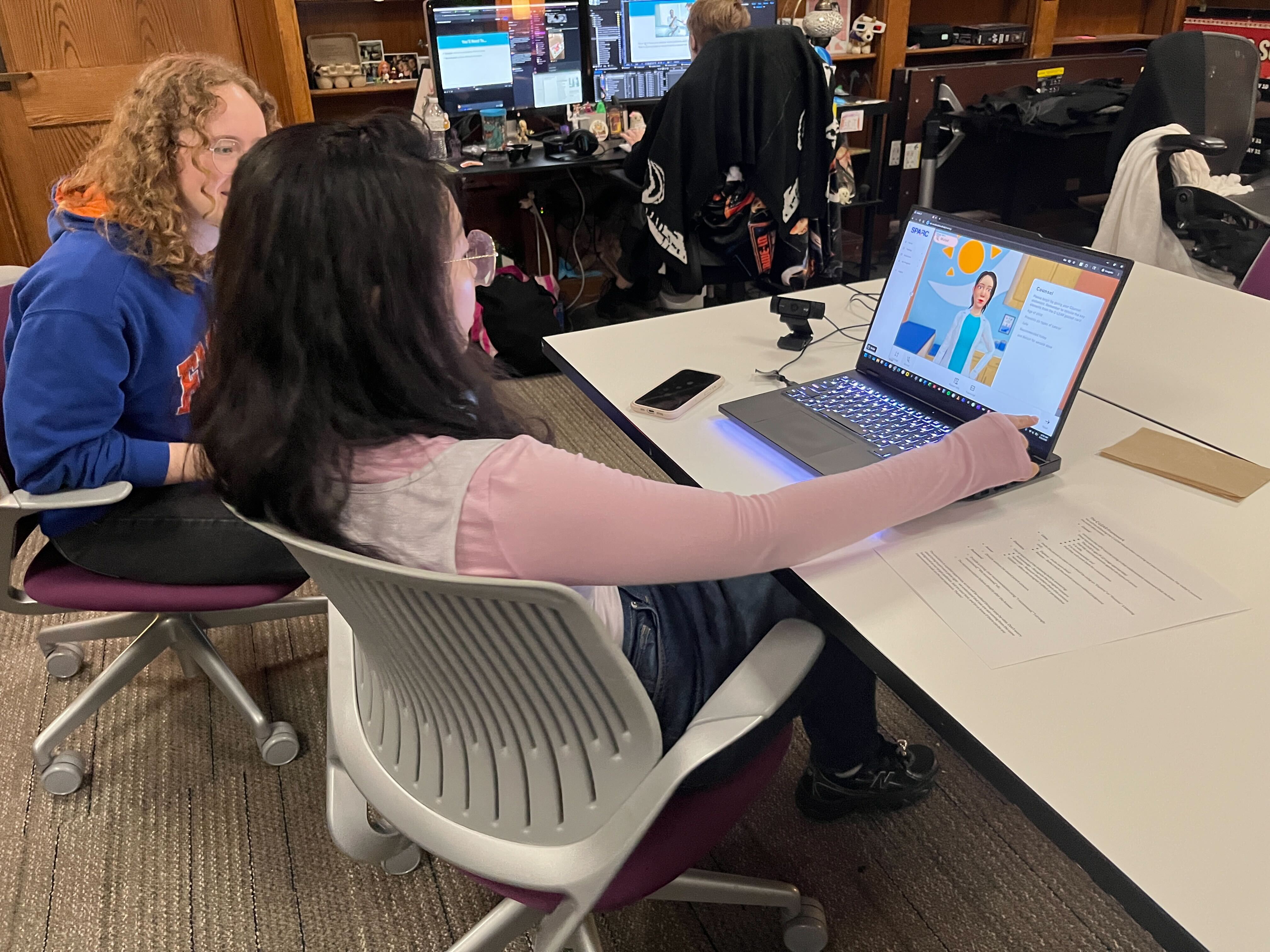
User Testing and Stakeholder Review
Learning and Insights
Coach Feedback
Insight: Clinicians skipped or ignored the feedback blurb mid-conversation, treating it as a interruption rather than a resource.
Action: Explore call-to-actions to reframe feedback as forward-looking coaching rather than evaluation. Try adding a timed session before user can skip.
PHASE & PROGRESS INDICATION
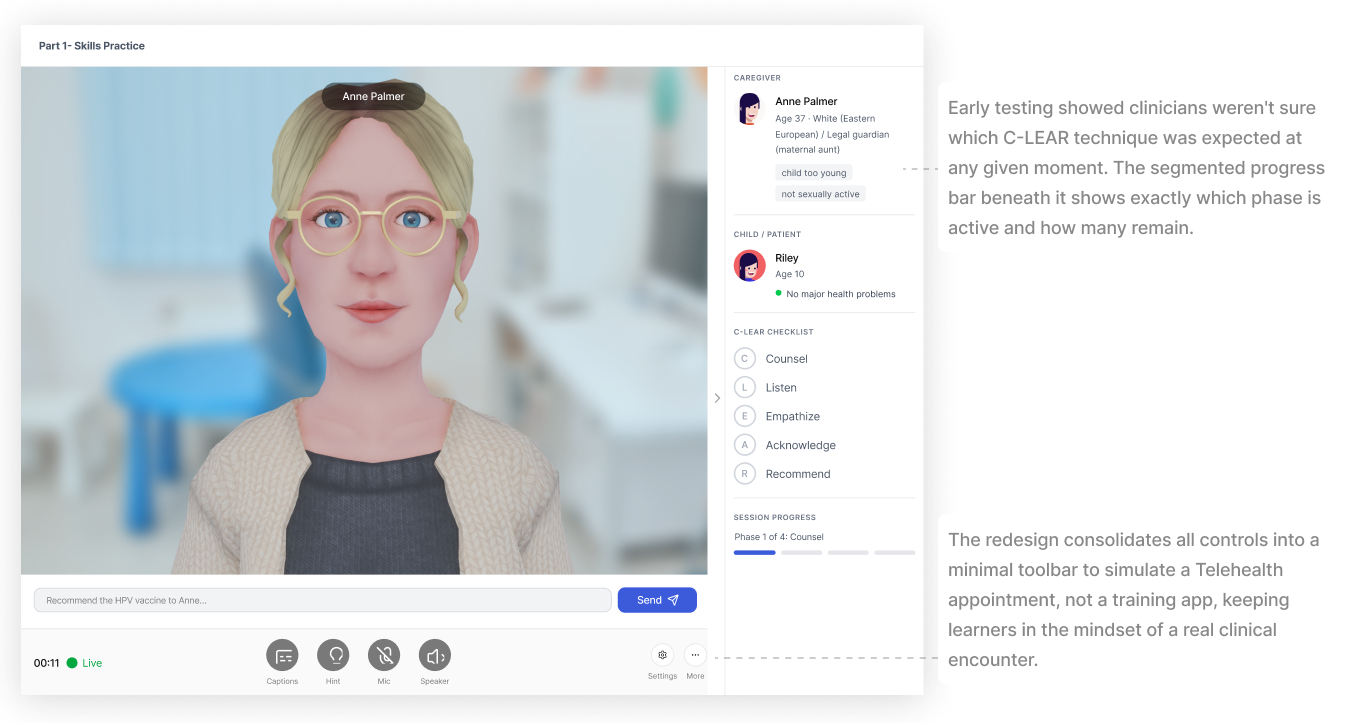
Insight: Users felt disoriented across session phases, unsure which C-LEAR technique was currently expected and how far along they were in the session.
Action: Need to highlight the current phase and add progress indicator.
INTERACTIONS
Insight: Clinicians wanted to stay immersed in the patient conversation. Secondary controls and context panels created visual noise that broke simulation realism.
Action: Move session controls to a minimal bottom bar modeled on video call conventions, making the interface feel like a real telehealth session. Patient background and C-LEAR reference can be moved either into a side panel or a dropdown.
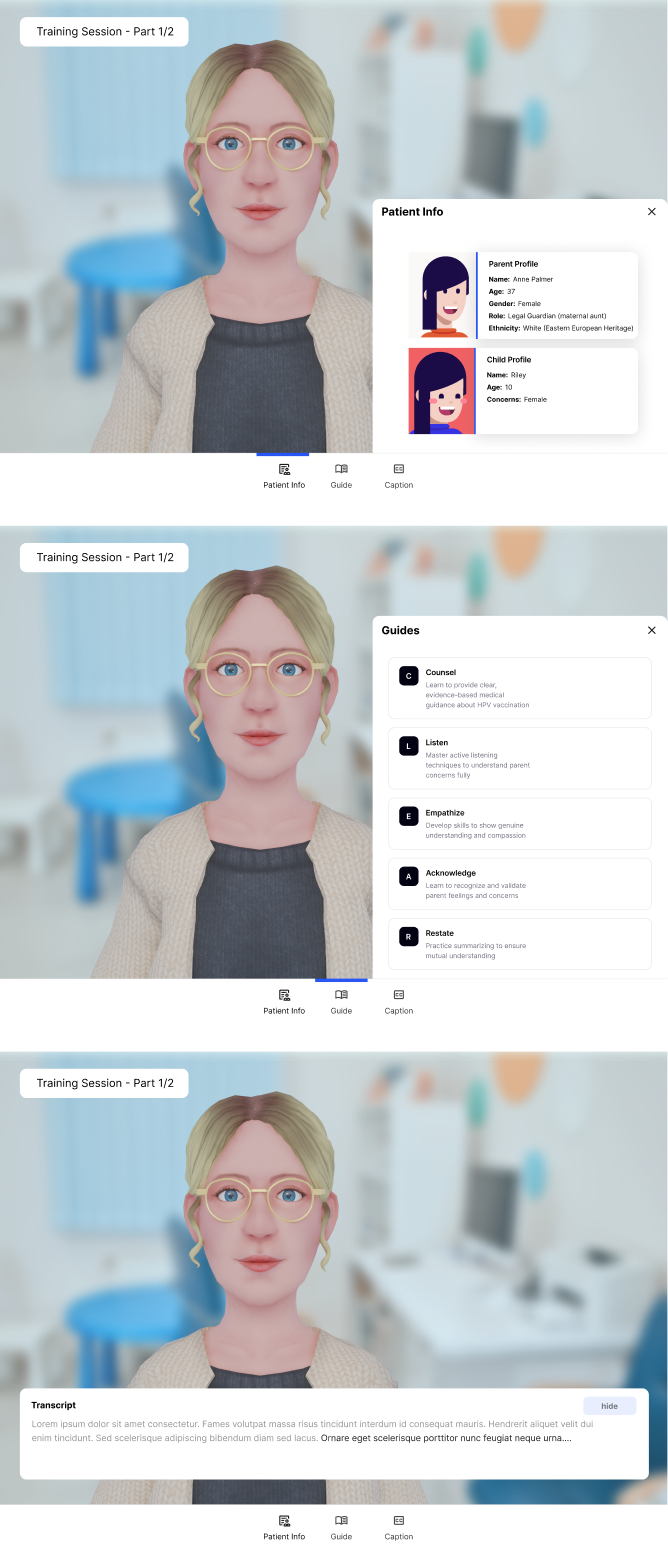
Product Walkthrough
The Pilot
AI Training
Result & Next step
Current Phase

Next Steps
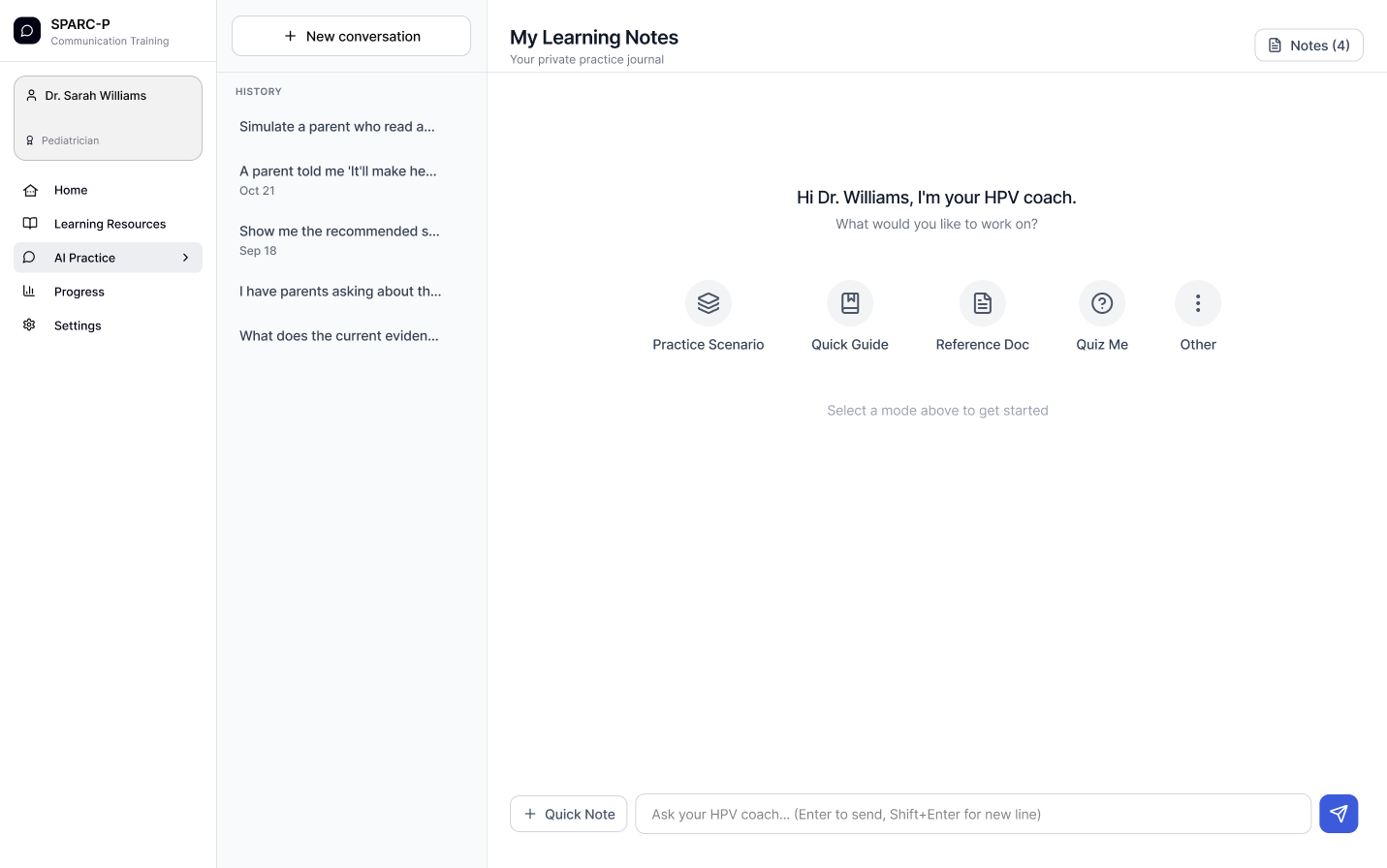
The current simulation trains clinicians through structured roleplay. The next phase introduces a conversational AI coach that clinicians can talk to before entering a formal training session: ask questions, rehearse specific phrases, explore edge cases, or simply think out loud about a difficult parent scenario they encountered that week.
The proposed chat interface can make invisible process interactive and scaffolded. The design question this opens up is how AI should behave as a professional learning partner rather than a task executor. In the context of clinical training, that means the coach shouldn't just answer questions — it should model the reasoning behind good communication, surface relevant C-LEAR principles without being prescriptive, and know when to push back versus when to affirm. This positions SPARC-P as a research opportunity at the intersection of human-AI interaction and professional learning: how do we design AI interlocutors that support expert skill development, not just novice onboarding?